Commercial Soap vs. Handmade Soap: What’s the Difference, Really?
Not better or worse — just made with different goals in mind.

Most of us grew up using commercially made soap. It’s widely available, familiar, and easy to find just about anywhere — grocery stores, pharmacies, big-box retailers. Commercial soap serves an important purpose: consistency and accessibility at a large scale.
Handmade soap, on the other hand, is something different entirely. Not better, not worse — just built with a different intention. Understanding that difference can help explain why handmade soap often feels different on your skin.
What commercial soap is designed to do. Commercial soaps are formulated to work for as many people as possible, across many environments, and over long periods of time. They’re made to be: consistent from bar to bar, shelf-stable for extended periods, cost-efficient to produce at scale, and widely distributed and easy to replace. That level of consistency requires very specific formulations and manufacturing processes. For most people, commercial soap does exactly what it’s meant to do — it cleans, it’s familiar, and it’s readily available.
What handmade soap is designed to do. Handmade soap is typically produced in much smaller batches and with a different set of priorities. Instead of scale and shelf life, the focus is often on: how the soap feels during use, how skin feels after washing, ingredient choices that support gentle, daily cleansing, and flexibility to adjust and refine formulas over time.
Handmade soaps are often created by small, local businesses and artisans. You’ll usually find them at farmers markets, pop-ups, select retail shops, or online — places where there’s a direct connection between the maker and the customer.
Handmade soap is artisan by nature. That means there’s intention behind each ingredient choice and each batch. It also means production is smaller, more hands-on, and more responsive.
If customers consistently mention dryness, tightness, or sensitivity, a handmade soap maker can adjust formulations thoughtfully. That kind of responsiveness simply isn’t possible at a mass-production level.
How this affects your skin.
The biggest difference most people notice between commercial and handmade soap isn’t the scent or the appearance — it’s how their skin feels afterward. Handmade soaps are often formulated to cleanse without leaving skin feeling stripped or uncomfortable, which can be especially noticeable during winter months or with frequent handwashing. That focus on post-wash comfort is intentional.
OUR APPROACH
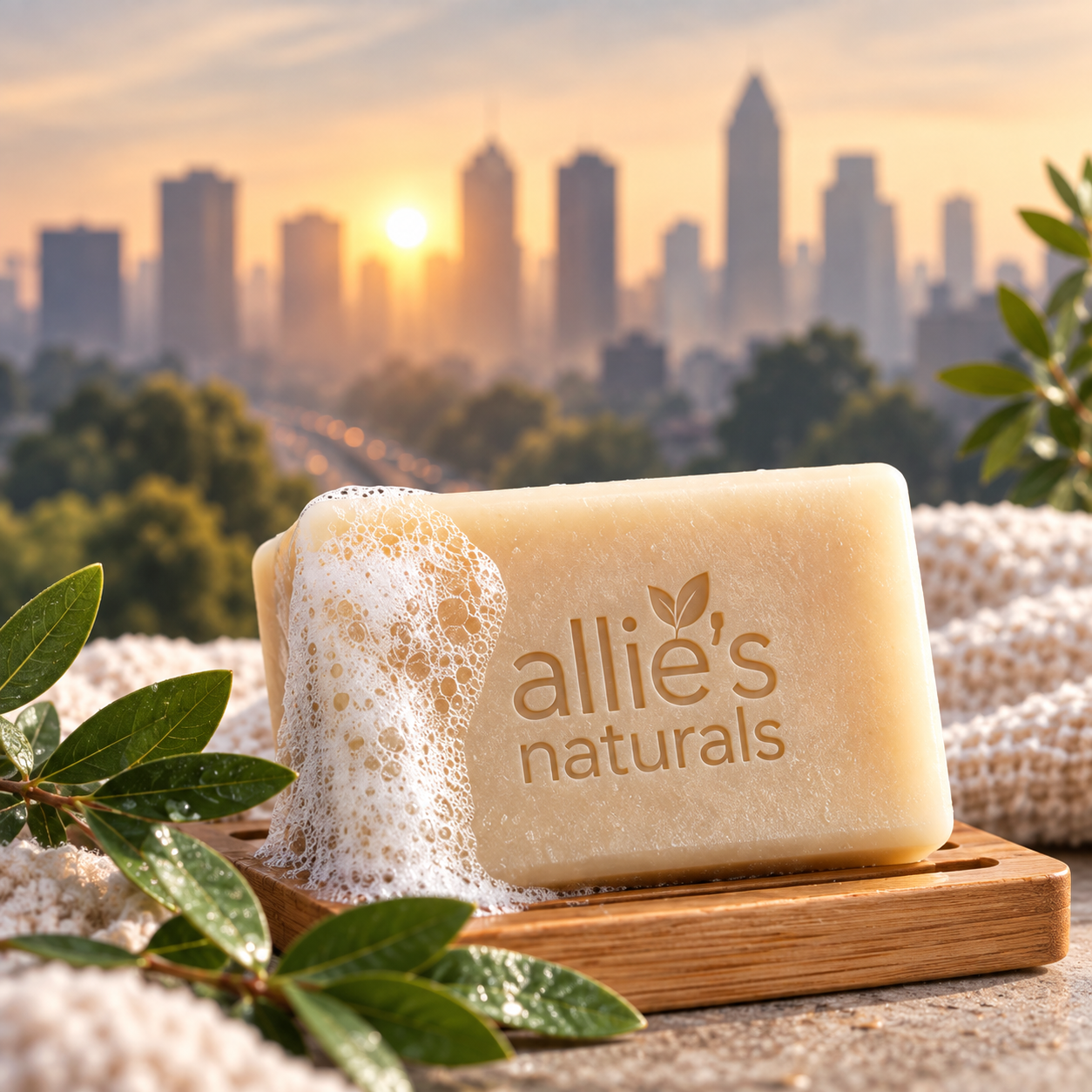
At Allie’s Naturals, we think of soap as something you use every day — sometimes multiple times a day. Because of that, how your skin feels after washing matters just as much as how clean it feels in the moment.
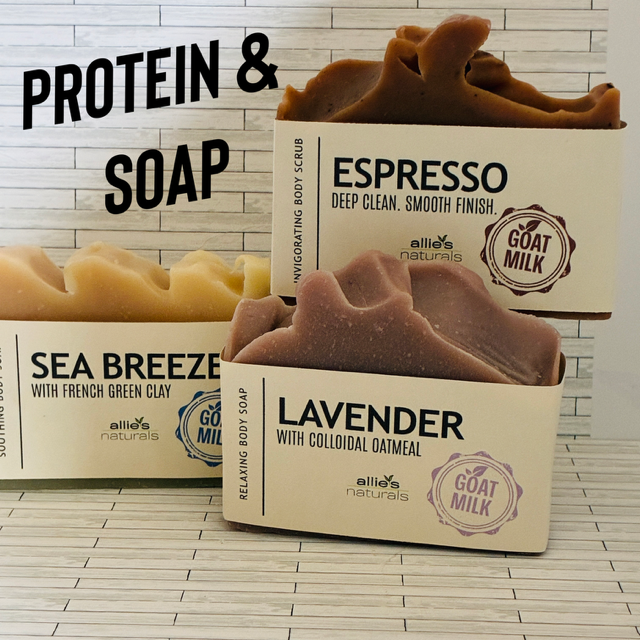
Using ingredients like goat milk and carefully chosen oils allow us to create soaps that support gentle cleansing and daily use, without overcomplicating routines or relying on unnecessary extras.
THE TAKEAWAY
Commercial soap and handmade soap serve different purposes. One is built for scale and availability. The other is built for intention, feel, and function. Neither is wrong. They’re simply made with different goals in mind.
If you would like more information, visit our website and take a look at the small batch, handmade goats milks soaps that we offer.
Thanks,
Michael