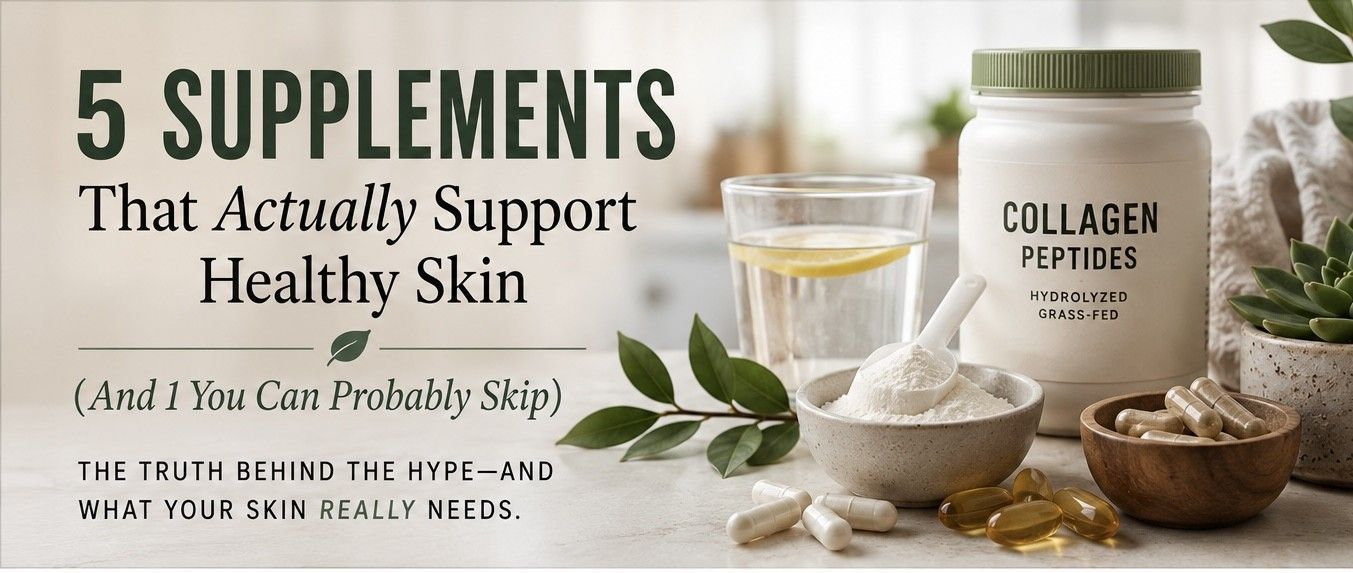
5 Supplements That Actually Support Healthy Skin (And 1 You Can Probably Skip)
What Works. What Doesn't. And Why.
When it comes to healthy skin, there's no shortage of products promising miraculous results. Walk into any vitamin store or browse online, and you'll find dozens of supplements claiming they'll erase wrinkles, boost collagen, or make your skin glow overnight.
The truth? Healthy skin isn't built by one supplement.
It's built through consistent habits: eating well, staying active, protecting your skin from the sun, getting quality sleep, and using gentle skincare that respects your skin's natural moisture barrier.
Supplements can play a supporting role—but they're exactly that: supplements, not substitutes.
Here are five that have some science behind them.
1. Hydrolyzed Collagen Peptides
Collagen is the most abundant protein in your skin, helping provide structure, firmness, and elasticity. As we age, our natural collagen production gradually declines.
Today's collagen supplements are typically hydrolyzed collagen peptides, meaning they've been broken down into smaller peptides that are readily digested and absorbed.
Several studies suggest that consistent collagen peptide supplementation may help support skin hydration and elasticity over time.
My Experience
I've added one scoop of hydrolyzed collagen peptides to my morning coffee every day for several years.
Personally, I've noticed:
My nails grow much faster.
My hair grows more quickly.
My skin feels noticeably softer.
Women at the dance studio where I work often ask if I've had Botox. I always smile and tell them my routine is actually pretty simple: I use a gentle facial soap every day, wear sunscreen, and supplement with collagen.
One question I hear frequently is:
"Will collagen make me grow facial hair?"
Current research doesn't support that concern. Facial hair growth is primarily influenced by hormones and genetics—not collagen supplementation.
Everyone's experience is different, but consistency has been the biggest factor for me.
Bottom Line: One of the few supplements with encouraging research supporting skin health.
2. Vitamin C
Vitamin C does far more than support your immune system.
It's essential for normal collagen production and also functions as an antioxidant, helping protect your skin from everyday environmental stress.
Whenever possible, try to get Vitamin C from foods like berries, citrus fruits, peppers, broccoli, and tomatoes. Supplements can help fill the gap if your diet falls short.
Bottom Line: One of the most important nutrients for healthy skin.
3. Omega-3 Fatty Acids
Healthy fats help support your skin's natural moisture barrier.
Omega-3 fatty acids may help maintain skin hydration and support overall skin health, especially for people who don't regularly eat fatty fish.
Healthy skin begins with a healthy barrier.
Bottom Line: May help support skin hydration and barrier function.
4. Zinc
Zinc doesn't get nearly the attention it deserves.
It plays an important role in normal skin repair and immune function.
Most people meet their needs through a balanced diet, but deficiencies can affect skin health.
More isn't better—taking excessive zinc isn't recommended unless directed by your healthcare provider.
Bottom Line: Important, but don't overdo it.
5. Protein
This may be the most overlooked "skin supplement" of all.
Your skin is made largely from protein.
If your diet consistently falls short in protein, your body has fewer building blocks available to support healthy skin, hair, nails, and connective tissue.
This is why I always encourage people to focus on food first.
A quality diet will almost always outperform the latest trendy supplement.
Bottom Line: Don't overlook the fundamentals.
The One You Can Probably Skip...Biotin
Biotin has become one of the most heavily marketed beauty supplements available.
Unless you have a true biotin deficiency—which is relatively uncommon—there's limited evidence that taking extra biotin will noticeably improve healthy skin.
That doesn't mean biotin has no place.
It simply means it's often promoted as a miracle supplement when the science doesn't support those claims for most healthy people.
Save your money unless your healthcare provider recommends otherwise.
Healthy Skin Starts with Healthy Habits
No supplement can replace healthy daily habits.
If your goal is healthier-looking skin:
✔ Eat a balanced diet rich in protein, fruits, and vegetables.
✔ Stay hydrated.
✔ Exercise regularly.
✔ Get quality sleep.
✔ Protect your skin with sunscreen.
✔ Use gentle skincare products that support your skin's natural moisture barrier.
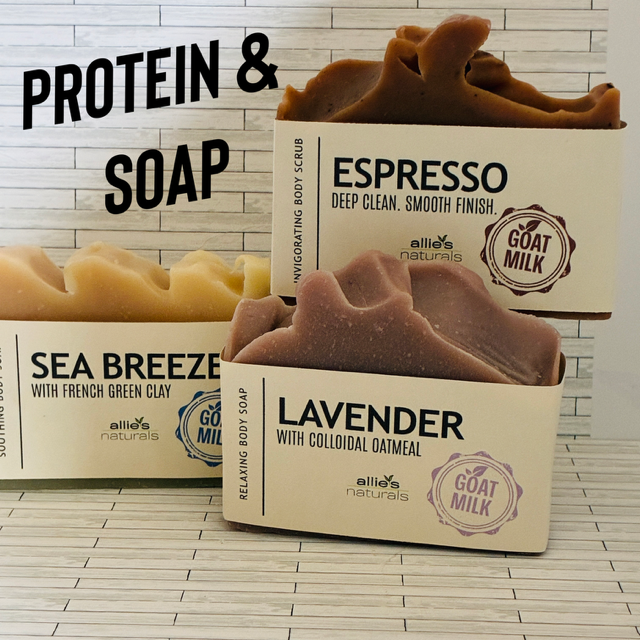
That's exactly why we created Allie's Naturals Goat Milk Soap.
Our handcrafted goat milk soaps are designed to gently cleanse your skin without leaving it feeling tight or stripped, helping support your skin's natural moisture barrier with every shower.
Sometimes healthier skin isn't about adding more products.
It's about choosing better daily habits.
Final Thoughts
There's no magic supplement.
There's no miracle cream.
Healthy skin is the result of small, consistent choices made day after day.
Supplements may help support those efforts—but they work best as part of a healthy lifestyle, not as a replacement for one.
Simple habits.
Thoughtfully chosen ingredients.
Healthy skin.
Thanks for reading and comments are welcome, send to michael@alliesnaturals.com
Important Disclaimer
This article is intended for educational purposes only and should not be considered medical advice. Before starting any vitamin, mineral, herbal, or nutritional supplement, consult your primary care physician or qualified healthcare provider—especially if you take prescription medications, have an underlying medical condition, are pregnant, or are breastfeeding.